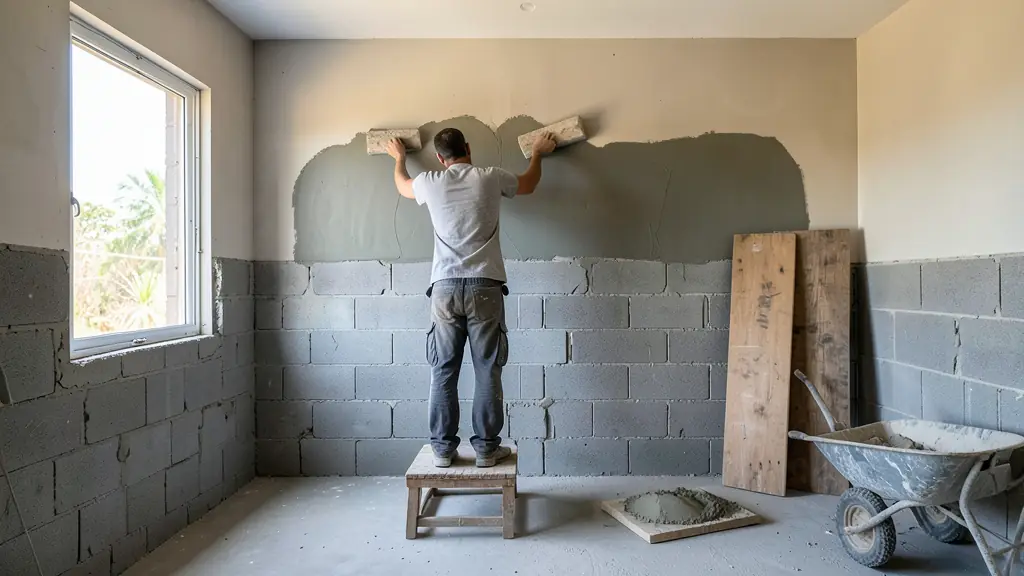
Good plastering gives walls a flat, durable surface that protects the brickwork and takes paint well. Poor plaster cracks, sounds hollow and lets damp in. Whether you need new walls plastered, an extension finished, or cracked plaster repaired, BuildingContractors.co.za can help you find plastering contractors. We don't plaster or sell materials ourselves. Tell us about the job and we pass your request to independent plasterers and builders in your area, who quote you directly. The request is free and you are under no obligation to accept a quote.
Types of plastering work
- New plaster: internal and external cement plaster on brick or block walls
- Extensions and alterations: matching new plaster to existing walls
- Repairs: cutting out cracked, hollow or damp plaster and replastering
- Skimming: a thin, smooth finish coat over plaster or ceilings
- Bagging and textured finishes: a thin coat that shows the brick pattern, or a decorative texture
Plaster is normally around 12 to 15 mm thick, applied in one or two coats depending on how even the walls are.
Plaster sand and plastering mix
Plaster needs plaster sand, a finer, well-graded sand with less clay than the building sand used for bricklaying mortar. Clayey or dirty sand causes shrinkage cracks. A common plastering mix is about one part cement to five or six parts plaster sand by volume, often with lime added for workability, using 50 kg bags of CEM II 32.5N or 42.5N cement. Your plasterer will adjust the mix for the wall and conditions. External plaster in coastal and high-rainfall areas needs a well-proportioned mix and good curing to resist moisture.
Curing, cracks and painting
Fresh plaster must not dry too fast. In hot or windy weather, keep it damp for a few days, especially on west-facing walls. Fine hairline cracks are common as plaster shrinks, but wide or stepped cracks may point to foundation movement on expansive clay, which needs a builder's or engineer's opinion. Let new plaster cure fully before painting, usually several weeks. Hollow-sounding patches, found by tapping, mean the plaster has lost its bond and should be cut out and redone.
Comparing plastering quotes
Plastering is usually quoted per m² of wall, so measure or send plans. Ask whether materials are included, how many coats, the finish, scaffolding for high walls, and whether corners, reveals and beads are included. Agree payment by completed areas rather than a large upfront deposit, and ask to see finished walls before the final payment. Check the walls with a long straight edge and a light shone along the surface, which shows up waves and hollows.
Comparing quotes for plastering
The lowest price is not always the best value. When your quotes arrive, check:
- Scope: what is included item by item, and which materials the contractor supplies.
- Payment: a deposit and payments in stages as work is completed, never most of it upfront.
- Time: the start date, how long the work will take and what happens if it runs late.
- Compliance and guarantee: approvals and certificates needed for the job, and the guarantee on workmanship.
What to include in your request
- Wall area in m², or plans with wall lengths and heights
- Internal, external or both, and the finish you want
- New walls, an extension, or repairs to existing plaster
- Labour only, or labour and materials
- Address, wall height and whether scaffolding is needed
Frequently asked questions
Do you do plastering yourselves?
What is the difference between plaster sand and building sand?
Why is my new plaster cracking?
How long before I can paint new plaster?
Plastering by province
- Plastering Gauteng
- Plastering Western Cape
- Plastering KwaZulu-Natal
- Plastering Eastern Cape
- Plastering Free State
- Plastering Limpopo
- Plastering Mpumalanga
- Plastering North West
- Plastering Northern Cape
Plastering by city and town
- Plastering in Johannesburg
- Plastering in Pretoria
- Plastering in Centurion
- Plastering in Sandton
- Plastering in Midrand
- Plastering in Randburg
- Plastering in Roodepoort
- Plastering in Alberton
- Plastering in Boksburg
- Plastering in Kempton Park
- Plastering in Benoni
- Plastering in Germiston
- Plastering in Krugersdorp
- Plastering in Vereeniging
- Plastering in Vanderbijlpark
- Plastering in Soweto
- Plastering in Edenvale
- Plastering in Umhlanga
- Plastering in Cape Town
- Plastering in Bellville
- Plastering in Somerset West
- Plastering in Paarl
- Plastering in Stellenbosch
- Plastering in George
- Plastering in Mossel Bay
- Plastering in Worcester
- Plastering in Durban
- Plastering in Pinetown
- Plastering in Pietermaritzburg
- Plastering in Richards Bay
- Plastering in Ballito
- Plastering in Margate
- Plastering in Newcastle
- Plastering in Port Elizabeth (Gqeberha)
- Plastering in East London
- Plastering in Bloemfontein
- Plastering in Welkom
- Plastering in Polokwane
- Plastering in Tzaneen
- Plastering in Nelspruit (Mbombela)
- Plastering in Witbank (eMalahleni)
- Plastering in Middelburg
- Plastering in Secunda
- Plastering in Rustenburg
- Plastering in Klerksdorp
- Plastering in Potchefstroom
- Plastering in Kimberley
- Plastering in Hermanus
- Plastering in Knysna
- Plastering in Plettenberg Bay
- Plastering in Jeffreys Bay