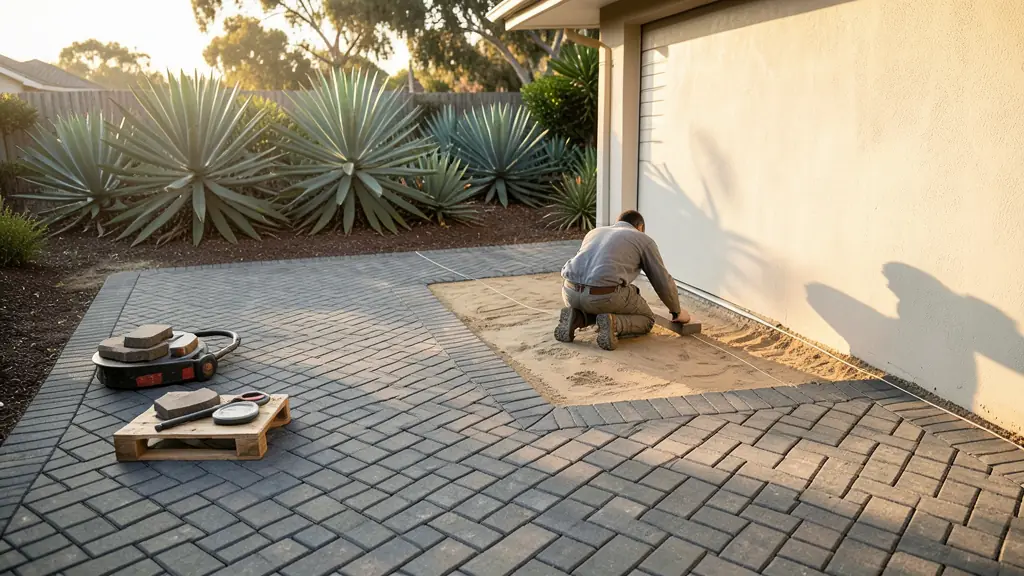
Brick paving covers most driveways, patios, pool surrounds and parking areas in South Africa, because it carries cars, drains well and is easy to lift and repair. BuildingContractors.co.za doesn't sell pavers or lay paving. Tell us the area in m², the type of paver and where you are, and we pass your request to independent paving suppliers or paving contractors in your area, who quote you directly. The request is free and there is no obligation to accept any quote.
Types of pavers bricks
Suppliers stock several kinds of pavers bricks:
- Rectangular concrete pavers: about 200 x 100 mm, laid in herringbone or stretcher bond
- Interlocking pavers: shaped blocks that lock together, popular for driveways and parking
- Clay pavers: fired clay in natural red, brown and blended colours that don't fade
- Cobbles and textured pavers: tumbled or riven finishes for patios and paths
- Grass blocks: open blocks that let grass grow through on overflow parking
Concrete paving blocks are made to SANS 1058 and clay pavers to SANS 1575. Ask the supplier which class or strength suits your traffic.
Thickness and quantities
Common thicknesses are 50 mm for footpaths and patios, 60 mm for normal home driveways and 80 mm for trucks, busy parking areas and industrial yards. A standard rectangular paver works out at about 50 per m². Measure the area accurately, add a cutting allowance of around 5 to 10 percent for edges and curves, and order everything from one batch so the colour matches. Kerbs or edge restraints are needed to stop the paving spreading.
Brick paving: the base matters most
Most paving failures come from the layers underneath. A driveway needs the topsoil removed, a compacted layer of suitable base material, a thin screeded layer of bedding sand, the pavers, then jointing sand brushed in and compacted. On expansive Highveld clay, a poor base leads to dips and ruts, and in the Cape winter rain, slopes and drainage stop water ponding against walls. If you are hiring a paving contractor, ask what base depth and compaction they allow for.
What affects the pavement bricks price
The pavement bricks price depends on type, thickness, colour, finish and quantity, and pigmented or clay pavers cost more than plain grey concrete. Delivery distance, offloading by crane truck and the amount ordered also count. If you also need laying, the quote should include excavation, base material, compaction, edging and rubble removal. Compare quotes on the same paver and the same base, as cheap paving often skimps on the layers you can't see.
Comparing paving bricks prices
Material prices change with demand, transport costs and quantity. When quotes arrive, check:
- Exact product: type, size, grade or strength, and the SANS mark where one applies.
- Quantity: per unit, per pallet, per m³ or per load, and whether there is a minimum order.
- Delivery: the delivery charge, offloading, and access for a large truck or crane truck.
- VAT and validity: whether the price includes VAT and how long it is held.
What to include in your request
- Area in m² and a sketch or photos of the site
- Paver type, thickness, colour and laying pattern
- Use: footpath, patio, home driveway or heavy traffic
- Supply only, or full laying including base and edging
- Delivery address, access for a crane truck and timing
Frequently asked questions
Do you sell paving bricks?
What thickness of paver do I need for a driveway?
How many pavers are in a square metre?
Is clay or concrete brick paving better?
Paving Bricks by province
- Paving Bricks Gauteng
- Paving Bricks Western Cape
- Paving Bricks KwaZulu-Natal
- Paving Bricks Eastern Cape
- Paving Bricks Free State
- Paving Bricks Limpopo
- Paving Bricks Mpumalanga
- Paving Bricks North West
- Paving Bricks Northern Cape
Paving Bricks by city and town
- Paving Bricks in Johannesburg
- Paving Bricks in Pretoria
- Paving Bricks in Centurion
- Paving Bricks in Sandton
- Paving Bricks in Midrand
- Paving Bricks in Randburg
- Paving Bricks in Roodepoort
- Paving Bricks in Alberton
- Paving Bricks in Boksburg
- Paving Bricks in Kempton Park
- Paving Bricks in Benoni
- Paving Bricks in Germiston
- Paving Bricks in Krugersdorp
- Paving Bricks in Vereeniging
- Paving Bricks in Vanderbijlpark
- Paving Bricks in Soweto
- Paving Bricks in Edenvale
- Paving Bricks in Umhlanga
- Paving Bricks in Cape Town
- Paving Bricks in Bellville
- Paving Bricks in Somerset West
- Paving Bricks in Paarl
- Paving Bricks in Stellenbosch
- Paving Bricks in George
- Paving Bricks in Mossel Bay
- Paving Bricks in Worcester
- Paving Bricks in Durban
- Paving Bricks in Pinetown
- Paving Bricks in Pietermaritzburg
- Paving Bricks in Richards Bay
- Paving Bricks in Ballito
- Paving Bricks in Margate
- Paving Bricks in Newcastle
- Paving Bricks in Port Elizabeth (Gqeberha)
- Paving Bricks in East London
- Paving Bricks in Bloemfontein
- Paving Bricks in Welkom
- Paving Bricks in Polokwane
- Paving Bricks in Tzaneen
- Paving Bricks in Nelspruit (Mbombela)
- Paving Bricks in Witbank (eMalahleni)
- Paving Bricks in Middelburg
- Paving Bricks in Secunda
- Paving Bricks in Rustenburg
- Paving Bricks in Klerksdorp
- Paving Bricks in Potchefstroom
- Paving Bricks in Kimberley
- Paving Bricks in Hermanus
- Paving Bricks in Knysna
- Paving Bricks in Plettenberg Bay
- Paving Bricks in Jeffreys Bay
Related services and supplies
- TR-02Paving ContractorsDriveways, patios, pool surrounds, walkways and parking areas
- BS-06Building Sand and StoneBuilding sand, plaster sand and washed river sand
- BS-03BricksClay stock bricks, face bricks, maxi bricks and cement bricks
- TR-07Concrete ContractorsStrip footings, raft foundations, surface beds and suspended slabs