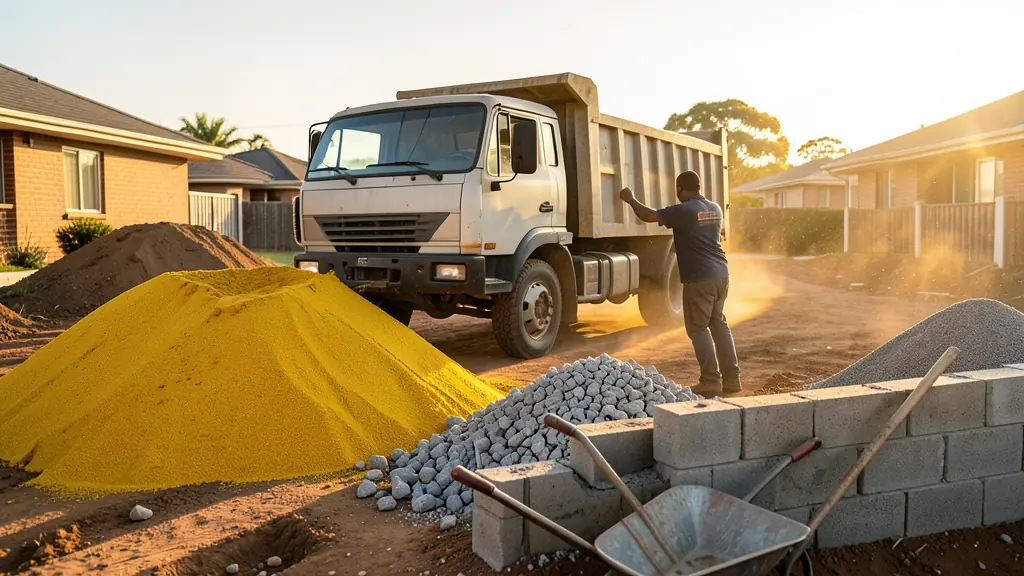
Good mortar, plaster and concrete depend on clean, well-graded aggregates. Building sand, plaster sand and stone are bulky and heavy, so where you buy them and how they are delivered matters as much as the price. BuildingContractors.co.za passes your request to independent sand and stone suppliers, quarries and building yards serving your area. They quote you directly per m³ or per load, delivered. We don't supply or deliver sand or stone ourselves. The request is free and there is no obligation to accept.
Sand and stone types and their uses
- Building sand: sand for mortar when laying bricks and blocks
- Plaster sand: finer, well-graded sand for wall plaster
- River sand: washed, coarser sand often used in concrete and for some mortar mixes
- Crusher stone: 19 mm crusher stone for concrete, and 13 mm or smaller for thinner work
- Crusher dust: fine stone dust used as bedding under paving
- Fill and G5 material: for building up levels under slabs and driveways
Plaster sand vs building sand
The two look similar but behave differently. Plaster sand should be fine, evenly graded and low in clay, so the plaster spreads smoothly and doesn't crack as it dries. Sand with too much clay or silt causes shrinkage cracks, poor bond and plaster that sounds hollow. Building sand for mortar can be a little coarser. If you are unsure, ask the supplier which sand they recommend for each job, and rub a handful between wet palms: sand that leaves heavy staining may contain too much clay.
Ordering by m³ or by the load
Sand and stone are sold per m³, per ton or by the load. Common deliveries range from a small tipper of a few m³ up to larger truck loads. Ask how many m³ are in the load, as this differs. For concrete, a common guide is roughly equal volumes of sand and crusher stone alongside the cement, but your builder will confirm the mix. Order sand and stone together where you can to save on delivery, and tip them on separate clean spots so they don't mix with soil.
Delivery, quality and storage
Tipper trucks are heavy: make sure there is firm, level ground to offload, away from drains and paving that could crack. Sand left on a pavement may break municipal by-laws, so ask about permission. Cover heaps in windy areas and during the Cape winter rain to stop washaways. Quality varies between pits and quarries, so a reliable local supplier with consistent sand is worth more than a slightly cheaper load that cracks your plaster.
Comparing building sand and stone prices
Material prices change with demand, transport costs and quantity. When quotes arrive, check:
- Exact product: type, size, grade or strength, and the SANS mark where one applies.
- Quantity: per unit, per pallet, per m³ or per load, and whether there is a minimum order.
- Delivery: the delivery charge, offloading, and access for a large truck or crane truck.
- VAT and validity: whether the price includes VAT and how long it is held.
What to include in your request
- Type of sand or stone and what it is for
- Quantity in m³ or number of loads
- Delivery address and where the tipper can offload
- Whether you need sand and stone delivered together
- When you need the delivery on site
Frequently asked questions
What is the difference between river sand and building sand?
How much sand do I need to plaster a wall?
Is building sand sold per m³ or per ton?
Do you deliver sand and stone?
Building Sand and Stone by province
- Building Sand and Stone Gauteng
- Building Sand and Stone Western Cape
- Building Sand and Stone KwaZulu-Natal
- Building Sand and Stone Eastern Cape
- Building Sand and Stone Free State
- Building Sand and Stone Limpopo
- Building Sand and Stone Mpumalanga
- Building Sand and Stone North West
- Building Sand and Stone Northern Cape
Building Sand and Stone by city and town
- Building Sand and Stone in Johannesburg
- Building Sand and Stone in Pretoria
- Building Sand and Stone in Centurion
- Building Sand and Stone in Sandton
- Building Sand and Stone in Midrand
- Building Sand and Stone in Randburg
- Building Sand and Stone in Roodepoort
- Building Sand and Stone in Alberton
- Building Sand and Stone in Boksburg
- Building Sand and Stone in Kempton Park
- Building Sand and Stone in Benoni
- Building Sand and Stone in Germiston
- Building Sand and Stone in Krugersdorp
- Building Sand and Stone in Vereeniging
- Building Sand and Stone in Vanderbijlpark
- Building Sand and Stone in Soweto
- Building Sand and Stone in Edenvale
- Building Sand and Stone in Umhlanga
- Building Sand and Stone in Cape Town
- Building Sand and Stone in Bellville
- Building Sand and Stone in Somerset West
- Building Sand and Stone in Paarl
- Building Sand and Stone in Stellenbosch
- Building Sand and Stone in George
- Building Sand and Stone in Mossel Bay
- Building Sand and Stone in Worcester
- Building Sand and Stone in Durban
- Building Sand and Stone in Pinetown
- Building Sand and Stone in Pietermaritzburg
- Building Sand and Stone in Richards Bay
- Building Sand and Stone in Ballito
- Building Sand and Stone in Margate
- Building Sand and Stone in Newcastle
- Building Sand and Stone in Port Elizabeth (Gqeberha)
- Building Sand and Stone in East London
- Building Sand and Stone in Bloemfontein
- Building Sand and Stone in Welkom
- Building Sand and Stone in Polokwane
- Building Sand and Stone in Tzaneen
- Building Sand and Stone in Nelspruit (Mbombela)
- Building Sand and Stone in Witbank (eMalahleni)
- Building Sand and Stone in Middelburg
- Building Sand and Stone in Secunda
- Building Sand and Stone in Rustenburg
- Building Sand and Stone in Klerksdorp
- Building Sand and Stone in Potchefstroom
- Building Sand and Stone in Kimberley
- Building Sand and Stone in Hermanus
- Building Sand and Stone in Knysna
- Building Sand and Stone in Plettenberg Bay
- Building Sand and Stone in Jeffreys Bay